
Buyer-side intelligence for retailers, furniture brands, marketplaces, importers and procurement teams evaluating Brazilian manufacturers.
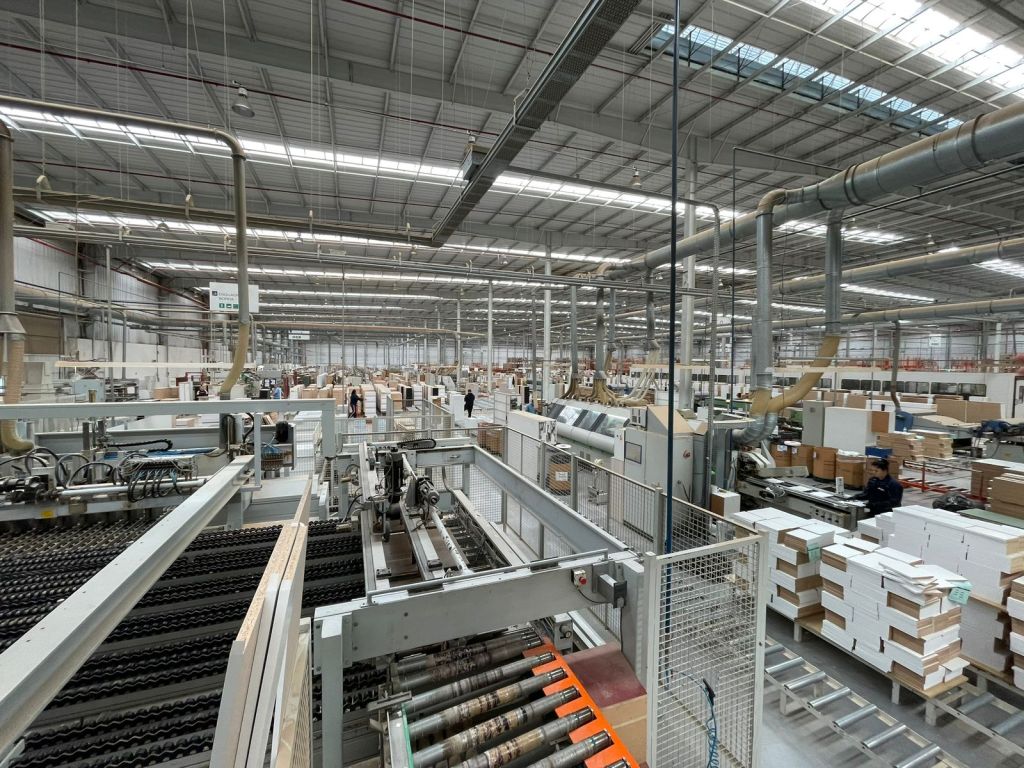
Brazil has an extensive furniture manufacturing base covering solid wood, MDF, MDP, upholstery, RTA, outdoor, office and design-led products.
Finding factory names is relatively easy.
Determining which manufacturer can execute your product at the required quality, cost, volume, timeline and destination-market standard is the difficult part.
Vista Furniture Co. helps international buyers make that decision.
We identify, screen and qualify Brazilian furniture manufacturers according to the requirements of each project. Our work gives buyers local visibility before they commit to product development, factory visits, samples or purchase orders.
Discuss your furniture sourcing project with Vista Furniture Co.
Why source furniture from Brazil?
Brazil has one of the most developed furniture manufacturing ecosystems in the Western Hemisphere.
The industry combines large industrial plants, specialized medium-sized factories, family-owned manufacturers, independent design studios and regional production clusters with decades of accumulated expertise.
The Brazilian Furniture Manufacturers Association, ABIMÓVEL, represents the national furniture sector and supports its development across manufacturing, policy and international trade.
The Brazilian Furniture Project, developed by ABIMÓVEL in partnership with ApexBrasil, supports the international presence of Brazilian furniture companies in global markets.
Brazil can be particularly relevant for buyers seeking:
- Solid wood furniture
- MDF and MDP case goods
- RTA and flat-pack furniture
- Upholstery
- Outdoor furniture
- Private-label collections
- OEM development
- Design differentiation
- Supplier diversification
- Production closer to the Americas
Brazil is not the correct origin for every product.
Some projects depend on component ecosystems, extreme volumes or target costs that may be better served elsewhere. The origin decision must be made by category, not by general perception.
The first sourcing question should be:
Does Brazil make strategic and commercial sense for this product?
Only then should the search for manufacturers begin.
Who Vista works with
Vista supports companies that are considering Brazil as a manufacturing origin or need stronger visibility into an existing Brazilian supply chain.
Our clients and prospective clients include:
- Furniture retailers
- Home and living brands
- E-commerce companies
- Marketplaces
- Importers and distributors
- Wholesalers
- Hospitality groups
- Architecture and interior brands
- Procurement teams
- Private-label businesses
- Companies diversifying production beyond Asia
Some buyers arrive with complete technical drawings and a defined product specification.
Others have an existing collection that must be adapted for Brazilian production. Some are still determining whether Brazil is the right origin for the category.
The sourcing process should reflect that stage.
A buyer evaluating Brazil for the first time needs a different type of analysis from a company that already has an approved design, target cost and annual forecast.
Furniture categories sourced in Brazil
Vista evaluates manufacturers across different furniture categories, materials and production models.
Solid wood furniture
Brazil has established capabilities in:
- Dining tables
- Dining chairs
- Beds
- Sideboards
- Cabinets
- Benches and stools
- Shelving
- Coffee and side tables
- Lounge chairs
- Outdoor furniture
- Design-led residential collections
Supplier qualification should examine more than the appearance of the finished product.
Important areas include:
- Timber species
- Legal origin
- Certification claims
- Moisture content
- Kiln drying
- Component selection
- Lamination
- Joinery
- Sanding
- Finishing
- Packaging
- Batch consistency
A visually convincing sample can still fail after export if moisture, construction or finishing were not controlled correctly.
For certified timber programs, buyers should verify the exact certificate scope, chain of custody and current status through the official FSC Public Certificate Search.
Read our complete guide to Brazilian solid wood furniture.
MDF, MDP and panel furniture
Brazilian factories manufacture panel-based products across bedroom, living, storage, kitchen, bathroom and home-office categories.
Common products include:
- Wardrobes
- Dressers
- Nightstands
- TV units
- Shelving
- Desks
- Storage cabinets
- Modular kitchens
- Bathroom furniture
- Pantry furniture
- Children’s furniture
- Flat-pack products
The relevant manufacturing capabilities go beyond cutting panels.
An export-oriented program may require:
- CNC precision
- Drilling consistency
- Edge-banding quality
- Surface protection
- Hardware control
- Pre-assembly
- Flat-pack engineering
- Assembly instructions
- Carton development
- Repeatability across production batches
A factory may produce attractive assembled furniture for the Brazilian market and still be unprepared for an international RTA or e-commerce program.
For products entering the United States, MDF, particleboard, certain hardwood plywood products and finished goods containing regulated composite wood components may fall under the EPA’s TSCA Title VI formaldehyde emission requirements.
The buyer should verify the complete bill of materials rather than accepting a general statement that a product is compliant.
RTA and flat-pack furniture
Ready-to-assemble furniture is not simply assembled furniture placed into a smaller carton.
The product must be designed for disassembly, transportation and customer assembly from the beginning.
The development process should account for:
- Connector positioning
- Drilling tolerance
- Hardware access
- Assembly sequence
- Tool requirements
- User error
- Repeated handling
- Package dimensions
- Component protection
- Replacement parts
- Returns
Packaging must reflect the actual distribution channel.
Furniture delivered by a specialized furniture carrier faces different conditions from a carton moving through a marketplace warehouse, parcel carrier and residential final mile.
The International Safe Transit Association’s testing procedures provide recognized frameworks for evaluating packaging against different transport environments.
Read our guide to flat-pack versus assembled furniture.
Upholstered furniture
Brazil has a substantial upholstery manufacturing base producing:
- Sofas
- Sectionals
- Recliners
- Lounge chairs
- Dining chairs
- Ottomans
- Benches
- Upholstered beds
- Mattresses
- Outdoor cushions
The technical evaluation begins beneath the fabric.
A buyer should review:
- Frame material
- Frame construction
- Moisture content
- Suspension systems
- Foam density
- Foam recovery
- Adhesives
- Sewing
- Seam allowance
- Pattern alignment
- Fabric-lot control
- Cushion construction
- Feet and connectors
- Packaging pressure
- Applicable testing
- Destination-market labels
A domestic upholstery manufacturer may have excellent craftsmanship but limited experience with international regulations, law labels or e-commerce packaging.
Export readiness must be evaluated for the exact product and destination.
Outdoor furniture
Brazilian factories manufacture outdoor collections using:
- Solid wood
- Aluminum
- Steel
- Synthetic rope
- Woven fibers
- Outdoor fabric
- Foam
- Glass
- Stone
- Ceramic surfaces
- Composite materials
Outdoor production requires a different technical framework.
Materials and construction may need to be evaluated for:
- Corrosion
- Ultraviolet exposure
- Water drainage
- Colorfastness
- Dimensional movement
- Foam drying
- Hardware performance
- Finish maintenance
- Coastal environments
A product intended for a covered terrace does not face the same conditions as a chair permanently exposed beside a pool.
The intended use must be defined in the original sourcing brief.
Authored, premium and design-led furniture
Brazil is also relevant for buyers seeking furniture with a stronger design identity.
The country’s modern furniture tradition, architecture, material knowledge and independent design scene create opportunities beyond commodity manufacturing.
Projects can include:
- Licensing an existing design
- Distributing a Brazilian brand
- Adapting a current collection for export
- Developing an exclusive collection
- Industrializing a studio-designed product
- Producing limited editions
- Developing hospitality or contract pieces
Design-led sourcing introduces intellectual-property and reproducibility questions.
The buyer must confirm:
- Who owns the design
- Who is authorized to manufacture it
- Which markets are included
- Whether exclusivity exists
- Whether modifications are permitted
- How the design will be protected
- Whether production can be repeated consistently
A strong prototype is not enough.
The product must preserve its design intent across repeated production.
OEM and private-label furniture
Brazilian manufacturers can work under different product-development models.
A buyer may provide:
- Complete technical drawings
- Reference samples
- Product images
- Material specifications
- Target dimensions
- A general design brief
- An existing product that requires adaptation
The factory may manufacture a buyer-owned design, adapt one of its current products or develop a collection jointly.
Private label can include:
- Buyer branding
- Custom labels
- Product names
- SKUs
- Barcodes
- Packaging artwork
- Manuals
- Warnings
- Importer information
- Spare parts
- Warranty processes
- Batch tracking
The correct model depends on design ownership, customization, expected volume, target cost and commercial strategy.
Read our guide to private-label furniture manufacturing in Brazil.
Finding a manufacturer is not the same as qualifying one
Public directories, trade fairs, industry projects and online searches can produce long lists of Brazilian furniture manufacturers.
A list does not reveal whether a factory is suitable for your project.
It may not show:
- Whether the manufacturer accepts OEM work
- Whether it accepts private-label projects
- Whether it has available capacity
- Whether it can meet the target price
- Whether it produces the product internally
- Which processes are subcontracted
- Whether quality is repeatable
- Whether packaging fits the sales channel
- Whether communication is reliable
- Whether the supplier understands the destination market
- Whether the business is operationally stable
Our guide to the best Brazilian furniture manufacturers for international buyers presents publicly established manufacturers by category and apparent buyer fit.
A qualified shortlist is different.
It is built around one buyer, one category and one commercial objective.
How Vista qualifies Brazilian furniture manufacturers
Vista evaluates the relationship between the buyer’s requirements and the factory’s actual capabilities.
The qualification process can include the following areas.
Product and category fit
We assess whether the factory regularly works with the relevant:
- Product type
- Materials
- Construction methods
- Finishing systems
- Price position
- Production volume
- Distribution channel
A general furniture manufacturer is not automatically qualified for every category.
Production capability
We examine how the product will actually be made.
The assessment may include:
- Machinery
- Production flow
- Capacity
- Bottlenecks
- Labor dependence
- Tooling
- Material handling
- Subcontracting
- Warehouse conditions
- Maintenance
- Production planning
Factory size alone does not prove suitability.
A large plant can be inflexible. A smaller manufacturer can be technically strong but unable to support the required volume.
Quality systems
Qualification may review:
- Incoming-material control
- Approved samples
- Technical specifications
- Tolerances
- Inspection points
- Quality records
- Defect classification
- Corrective actions
- Final inspection
- Batch identification
- Complaint handling
A good prototype proves that the product can be made once.
It does not prove repeatable production.
Export readiness
Export readiness includes more than previous international sales.
A manufacturer must be prepared for the exact product, destination and distribution channel.
The assessment may examine:
- Documentation
- Product classification
- Material declarations
- Labels
- Manuals
- Carton data
- Packaging
- Testing history
- Communication
- Commercial accuracy
- Loading preparation
- Corrective responses
For products entering the United States, buyers sourcing timber or wood-derived furniture may also need to evaluate the current Lacey Act declaration requirements published by APHIS.
For products entering the European Union, wood and certain wood-derived products may fall within the EU Deforestation Regulation.
Regulatory classification and importer obligations should be confirmed by qualified laboratories, customs professionals and legal or compliance advisers.
Commercial alignment
A technically capable factory can still be a poor commercial fit.
Vista reviews alignment across:
- Target cost
- Order volume
- MOQ structure
- Number of SKUs
- Number of finishes
- Development expectations
- Payment terms
- Lead time
- Exclusivity
- Territory
- Forecast requirements
- Communication style
The strongest supplier is not necessarily the factory with the largest capacity or lowest initial quotation.
It is the manufacturer whose operating model matches the buyer’s program.
Use our supplier audit checklist to understand what should be reviewed before approving a factory.
Vista is not a trading company or factory representative
Vista Furniture Co. is a boutique sourcing intelligence consultancy specialized in Brazilian furniture manufacturing.
We do not sell furniture from a fixed catalogue.
We do not operate as the exporter of record.
We do not represent a permanent portfolio of factories that must be offered to every buyer.
Our work begins with the buyer’s requirements.
This structure allows us to evaluate manufacturers according to project fit rather than general visibility, existing representation agreements or the need to promote a specific factory.
Our role may include:
- Identifying manufacturers
- Screening potential suppliers
- Verifying supplier claims
- Organizing factory visits
- Comparing commercial proposals
- Supporting product development
- Coordinating samples
- Assessing export readiness
- Supporting communication
- Coordinating quality-control activities
The manufacturer produces the furniture.
Freight forwarders, customs brokers, laboratories and technical specialists perform their respective roles.
Vista helps the buyer structure the sourcing process with stronger local information, clearer decisions and better accountability.
How the furniture sourcing process works
1. Sourcing brief
The process begins with the product and the commercial objective.
We review:
- Product category
- Target country
- Sales channel
- Materials
- Product references
- Target price
- Expected volume
- Number of SKUs
- Packaging model
- Testing requirements
- Timeline
A vague brief normally produces broad catalogues and disconnected quotations.
A structured brief produces a usable factory search.
2. Category assessment
The first decision is whether Brazil makes sense for the category.
Brazil may be particularly attractive for a differentiated solid wood collection, a flexible upholstery program or a design-led private-label project.
It may be less attractive for a highly standardized product dependent on an Asian component ecosystem.
The origin should be evaluated before the manufacturer.
3. Regional assessment
Brazil does not operate as one uniform furniture industry.
Different production regions have developed expertise around different products, materials and manufacturing systems.
Vista determines which clusters and factory profiles are relevant to the brief.
Read our guide to Brazil’s furniture manufacturing regions.
4. Manufacturer mapping and screening
Potential manufacturers are identified and screened against the project requirements.
Initial screening may cover:
- Product fit
- Material experience
- Manufacturing model
- Scale
- Export markets
- Development interest
- Current capacity
- Commercial responsiveness
- Indicative price position
A weak response during initial screening often predicts a difficult relationship during development and production.
5. Factory qualification
Shortlisted manufacturers can be assessed through:
- Corporate documentation
- Management interviews
- Factory visits
- Production analysis
- Sample reviews
- Quality records
- Export documentation
- Commercial references
The required depth depends on the value, complexity and risk of the project.
6. Commercial comparison
Factory quotations should be normalized before comparison.
Two FOB prices may include different:
- Materials
- Grades
- Construction
- Hardware
- Finishing systems
- Packaging
- Testing
- Development work
- Payment terms
- Incoterms
- Warranty assumptions
A lower price can be based on a different product.
7. Product development and sampling
Vista can support communication between the buyer and manufacturer during:
- Drawings
- Material selection
- Costing
- Construction reviews
- Finish development
- Upholstery selection
- Prototyping
- Packaging concepts
- Sample approval
Development decisions should be documented.
Verbal approvals create uncertainty during production.
8. Pilot production
A pilot order reveals problems that one sample cannot.
It tests:
- Repeatability
- Production flow
- Material variation
- Color consistency
- Labor instructions
- Packaging rhythm
- Inspection procedures
- Documentation
Scaling before the pilot is validated can turn a correctable issue into a container-level loss.
9. Production and quality control
Production monitoring can focus on the points where defects are created.
Depending on the product, this may include:
- Incoming materials
- Moisture
- Machining
- Frame construction
- Gluing
- Finishing
- Upholstery
- Hardware
- Assembly
- Packaging
- Loading
Final inspection remains important.
It is also late in the process.
10. Export preparation
Before shipment, the parties may need to align:
- Commercial invoice
- Packing list
- Product classification
- Certificates
- Labels
- Manuals
- Importer information
- Carton marks
- Package dimensions
- Freight booking
- Inspection records
- Container loading
Vista can coordinate information between the buyer, manufacturer and specialist providers.
For a complete overview, read our buyer’s guide to furniture manufacturing in Brazil.
What Vista needs to evaluate your project
A useful initial sourcing brief should include:
- Product category
- Destination market
- Sales channel
- Product references or drawings
- Preferred materials
- Target retail price
- Target landed cost, when available
- Estimated initial order
- Expected annual volume
- Number of SKUs
- Finish or fabric strategy
- Packaging requirements
- Required tests or certifications
- Development deadline
- Current sourcing challenge
Not every buyer will have all this information at the beginning.
The clearer the brief, the more precise the manufacturer search can be.
When Vista is the right fit
Vista is most useful when the buyer needs more than factory names.
The engagement can be a strong fit when the project requires:
- Independent local supplier evaluation
- Comparison between manufacturers
- OEM development
- Private-label production
- A new furniture category
- Factory visits in Brazil
- Sample and prototype coordination
- Export-readiness analysis
- Better visibility into quality risk
- Better visibility into production risk
- Local communication with Brazilian manufacturers
- A structured alternative to relying on trade-fair contacts
Vista may not be necessary when the buyer already knows the exact manufacturer, is purchasing a standard catalogue product and has an experienced internal team managing supplier qualification, compliance and production.
Frequently asked questions
Can Vista provide a list of Brazilian furniture manufacturers?
Vista identifies and maps manufacturers according to the buyer’s requirements.
The objective is not to deliver a generic list. The shortlist is built around the product, market, volume, price position, sales channel and technical requirements.
Does Vista represent specific factories?
No.
Vista works from the buyer’s brief and evaluates manufacturers according to each project.
Can Vista help with OEM and private-label furniture?
Yes.
Vista can identify manufacturers suited to buyer-owned designs, adapted factory products and jointly developed private-label programs.
Does Vista work with solid wood and MDF furniture?
Yes.
Vista evaluates manufacturers across solid wood, MDF, MDP, plywood, upholstery, metal, outdoor materials and mixed-material construction.
Does Vista work with small orders?
Order viability depends on the product, material, complexity, customization, factory and total commercial value.
The project must be reviewed before a realistic manufacturer profile and sourcing path can be defined.
Can international buyers visit furniture factories in Brazil?
Yes.
Vista can organize and accompany factory visits as part of a structured sourcing or supplier-qualification process.
Can Vista guarantee factory performance?
No responsible consultancy should guarantee a supplier’s future performance.
Vista reduces uncertainty through screening, factory qualification, documentation, local verification and structured coordination.
Does Vista handle international shipping?
Vista does not operate as a freight forwarder or customs broker.
We can coordinate with qualified logistics providers and help align manufacturers with the operational information required for export preparation.
Can buyers contact Brazilian manufacturers directly?
Yes.
Direct contact may be effective when the buyer knows the category, understands technical quotations and has internal resources to manage qualification, compliance, development and quality.
Vista becomes valuable when the buyer needs local judgment, independent comparison and a more structured decision process.
Start your furniture sourcing project in Brazil
Send Vista your product category, destination market, estimated volume and current sourcing challenge.
We will assess whether Brazil is a realistic manufacturing origin for the project and identify the next sourcing decision that needs to be made.
Discuss your furniture sourcing project with Vista Furniture Co.
Email: contact@vista-furniture.com
Learn more about Vista Furniture Co..
Follow Vista Furniture Co.
Follow our analysis of Brazilian furniture manufacturing, supplier qualification, product development and international sourcing.
Instagram · LinkedIn · Substack
 Brazilian Furniture Sourcing Hub