
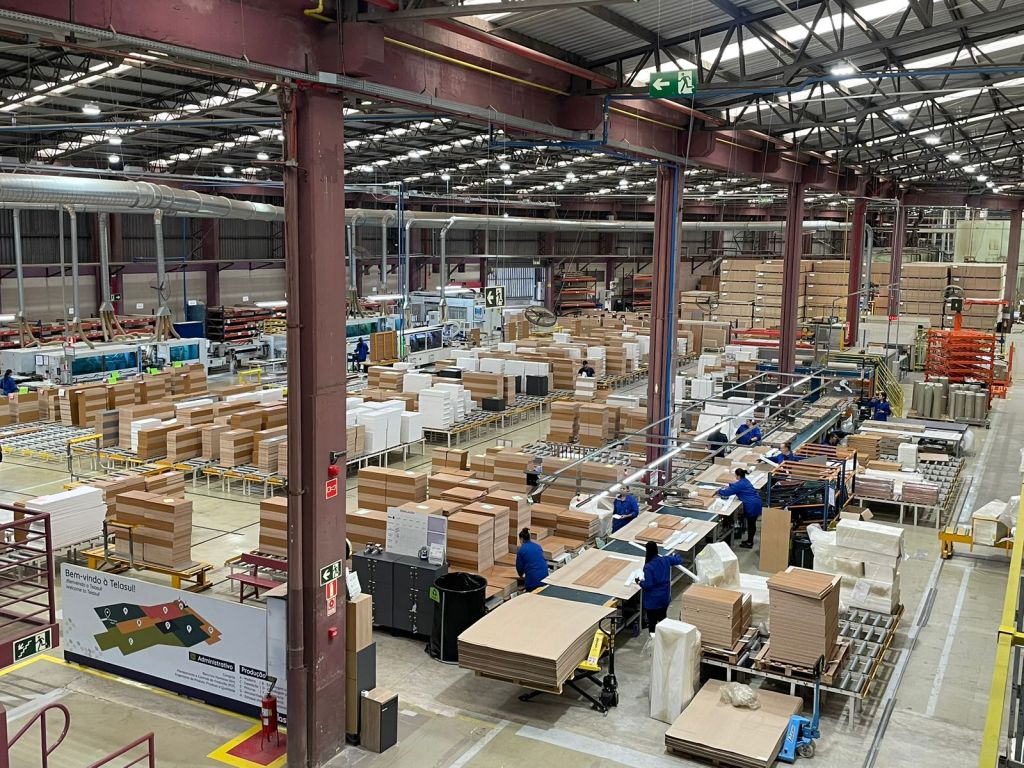
The global landscape for furniture manufacturing and procurement is undergoing a profound structural realignment. Historically, high-volume furniture buyers—including enterprise retailers, direct-to-consumer (DTC) brands, and hospitality procurement firms—relied heavily on supply chains rooted in Southeast Asia. However, an accumulation of macroeconomic pressures has fundamentally disrupted this reliance. The geopolitical landscape is increasingly defined by severe trade barriers, with furniture imports from traditional manufacturing powerhouses like China, Vietnam, and Indonesia now facing crippling tariffs ranging from 25% to 100%. Concurrently, the shipping industry remains vulnerable to volatile ocean freight rates, canal bottlenecks, and protracted transit timelines that introduce severe friction into tight retail cycles.
In response, international buyers are aggressively diversifying their supply footprints, turning their attention toward Latin America’s largest economy: Brazil. Operating under a highly favorable standard U.S. import duty of just 10%, Brazil stands out as an financially optimized alternative. Beyond the clear tariff advantages, the country offers exceptional, structural access to premium, certified solid hardwoods and highly sustainable plantation timbers. This rich material wealth is matched by a sophisticated, modern, and tech-enabled manufacturing infrastructure characterized by automated production lines, digital production flows, and advanced prototyping capabilities. Furthermore, the geographical positioning of Brazil allows for vastly accelerated transit times to both North America and Europe, significantly contracting the cash-to-conversion cycle and dramatically reducing the carbon footprint associated with long-haul transoceanic freight.
Yet, tapping into this premium industrial base requires navigating a highly intricate, modern compliance environment. Sourcing timber across international borders is no longer merely a transactional or logistical challenge; it is a rigorous regulatory exercise. The implementation of the European Union Deforestation Regulation (EUDR) alongside the stringent enforcement of the United States Lacey Act has transformed compliance from a passive legal check into an active, data-driven supply chain validation process. Enterprise buyers can no longer rely on blind faith or unverified supplier invoices. Navigating this legal terrain requires localized, deep operational intelligence.
Platforms such as Vista Furniture Co.—an agile, tech-enabled sourcing and product development firm born out of Brazil’s top-tier design retail ecosystem —are playing a pivotal role in this transition. By serving as an end-to-end operational bridge , Vista ensures that international brands can seamlessly leverage Brazil’s unparalleled design heritage and competitive manufacturing margins while maintaining flawless, uncompromised compliance with global environmental mandates.
The Macro Environment: Why Brazil is Realigning Global Sourcing
To understand why compliance has taken center stage, one must analyze the broader macroeconomic shifts driving brands toward Brazilian manufacturing. The furniture industry operates on thin margins where minor shifts in logistics, duties, or raw material access can dictate the commercial viability of a collection.
+---------------------------------------------------------------------------------+| GLOBAL FURNITURE SOURCING MATRIX |+----------------------+--------------------------+-------------------------------+| CRITERIA | SOUTHEAST ASIA (OLD) | BRAZIL (MODERN ALIGNMENT) |+----------------------+--------------------------+-------------------------------+| U.S. Import Duties | 25% to 100% Tariffs | ~10% Standard Tariff || Logistics Transit | 40-50 Days (High Risk) | 20-28 Days (Nearshore Alpha) || Raw Material Base | Imported / High Scarcity | Abundant Native & Plantation || Tech Infrastructure | High Volume Analog | Digital Flows & AI Logistics || Forestry Tracking | Fragmented Across Borders| Centralized Federal Systems |+----------------------+--------------------------+-------------------------------+
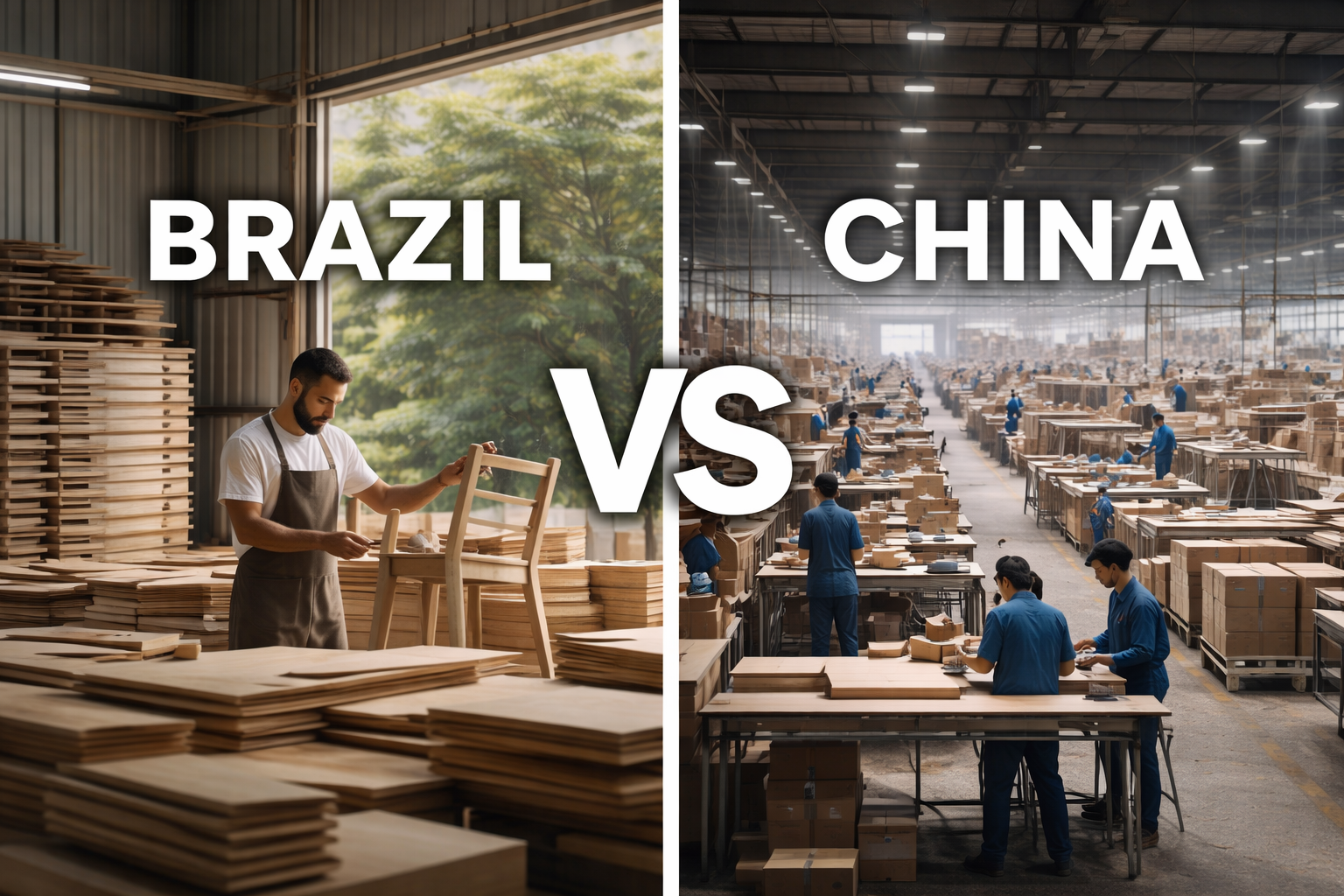
For decades, Asian manufacturing hubs dominated due to sheer scale and low labor costs. However, escalating geopolitical tensions, combined with targeted anti-dumping duties and broad Section 301 tariffs, have systematically eroded the margin advantages of transpacific sourcing. A standard dining table or premium sideboard manufactured in mainland China or parts of Southeast Asia now carries an import tax burden that can effectively render it uncompetitive in western consumer markets.
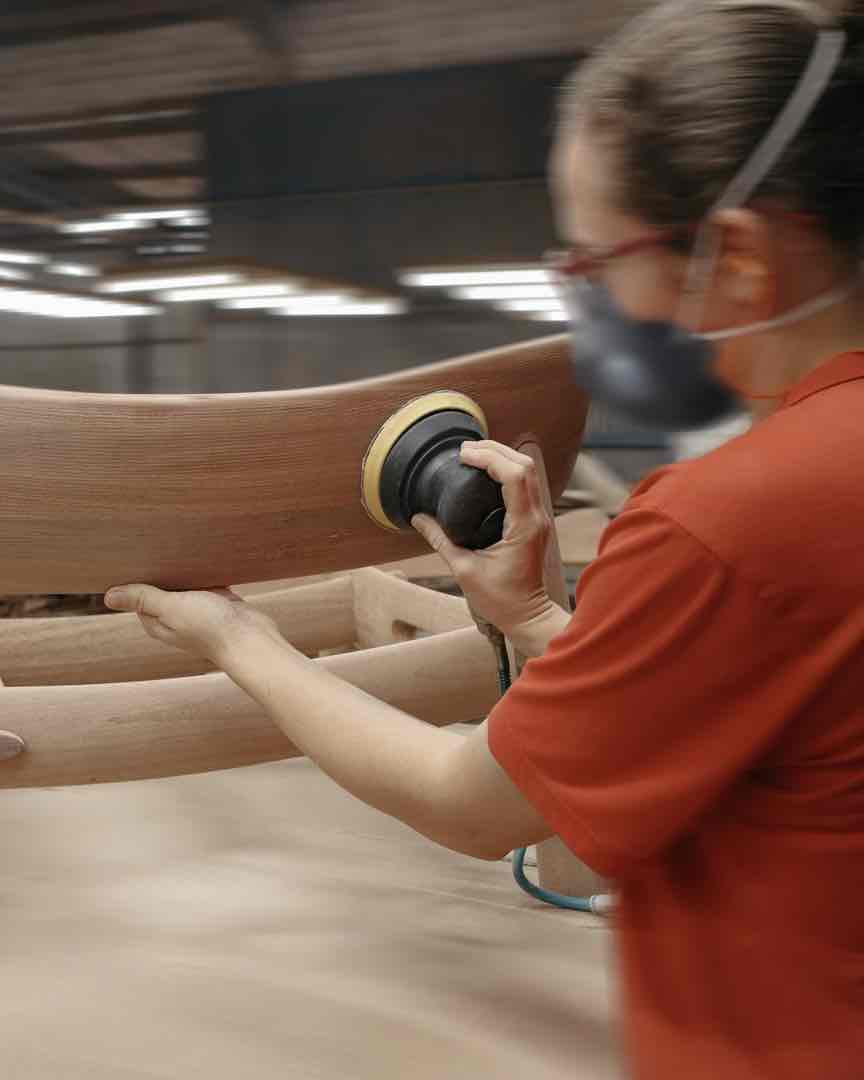
Brazil, by contrast, operates within a stable bilateral trade framework. The country’s furniture sector has spent the last decade absorbing significant capital investments, transitioning from a localized supplier network into a highly automated, export-oriented powerhouse. Brazilian factories utilize state-of-the-art European machinery, advanced CNC routing, and modular construction systems that allow for swift product adaptation and rapid scaling.
Crucially, this industrial base sits directly adjacent to one of the world’s most expansive and diverse forest networks. This immediate proximity eliminates the extended, multi-tiered supply chains common in Asia, where timber is frequently harvested in one nation, processed in a second, assembled in a third, and shipped from a fourth—a fragmented structure that makes tracing the true origin of wood an administrative nightmare. In Brazil, the entire lifecycle from forest management and harvesting to secondary processing, final assembly, and export container packing often occurs within a radius of a few hundred kilometers. This tight geographic integration provides an ideal foundation for establishing an airtight chain of custody, a prerequisite for satisfying modern environmental regulations.
Deep Dive: The U.S. Lacey Act – Legality, “Due Care,” and Liability
For companies importing furniture into the United States, the ultimate legal framework governing timber products is the Lacey Act (16 U.S.C. §§ 3371–3378). Originally enacted in 1900 to combat the trafficking of illegal wildlife, sweeping amendments passed in 2008 expanded its scope to include a broad range of plants and plant products, including timber, lumber, and finished wood furniture.

The legal mechanism of the Lacey Act is both simple and extraordinarily far-reaching: it is a federal crime to import, export, transport, sell, receive, acquire, or purchase in interstate or foreign commerce any plant taken, possessed, transported, or sold in violation of any underlying law of any foreign country or any U.S. state.
The Core Legal Implications for Furniture Buyers
- Strict Fact-Based Liability: The Lacey Act is a strict-liability statute regarding the underlying illegality of the wood. If an international buyer imports a container of chairs crafted from timber that was harvested in an unauthorized area of Brazil or without the proper municipal permits, the importer is in immediate violation of federal law. It does not matter if the buyer was entirely unaware of the infraction; the mere fact that the wood is illegal triggers the violation.
- The Principle of “Due Care”: While the civil and criminal penalties under the Act scale based on the importer’s level of awareness, the law explicitly requires all commercial importers to exercise “Due Care.” Due care is legally defined as the degree of care which a reasonably prudent business person would exercise under the same or similar circumstances. In the context of furniture procurement, turning a blind eye, accepting generic paper declarations, or relying on unverified supplier promises constitutes a clear failure of due care.
- Forfeiture and Penalties: If a shipment is found to contain illegally obtained wood, the U.S. government has the statutory authority to seize the entire shipment under asset forfeiture guidelines. The importer loses the merchandise, forfeits their capital, faces severe financial penalties, and risks catastrophic, public reputational damage.
Deciphering the PPQ Form 505 (Plant and Plant Product Declaration)
To enforce this mandate, the Animal and Plant Health Inspection Service (APHIS), working alongside U.S. Customs and Border Protection (CBP), requires importers to file a formal Plant and Plant Product Declaration (PPQ Form 505) upon entry. This is not a superficial cover sheet; it is a highly granular, legally binding declaration that demands exhaustive data transparency.
+-----------------------------------------------------------------------------------+| PPQ FORM 505 DATA REQUIREMENT FLOW |+-----------------------------------------------------------------------------------+| || [ENTRY DATA] ----> 1. Scientific Genus & Species (e.g., Astronium fraxinifolium) || 2. Exact Value of the Timber Component (USD) || 3. Quantitative Volume / Weight of the Wood Material || 4. Precise Country of Origin / Regional Harvest Location || |+-----------------------------------------------------------------------------------+
For every wood-containing component within a piece of furniture—whether it is the primary solid wood frame, the structural internal plywood, or an aesthetic face veneer—the importer must explicitly provide:
- The Scientific Genus and Species: Common trade names are legally insufficient. A buyer cannot simply write “Brazilian Hardwood” or “Tauari.” The form must state the precise botanical nomenclature (e.g., Couratari guianensis for Tauari, or Amburana cearensis for Cerejeira). Because different sub-species carry vastly different conservation statuses under international treaties like CITES (Convention on International Trade in Endangered Species), absolute precision is mandatory.
- The Quantitative Volume and Value: The precise volume of the timber and its proportional value relative to the total finished item must be broken down mathematically.
- The Exact Country and Region of Origin: The declaration must explicitly trace back to the nation of harvest. If the timber was harvested illegally or moved across borders without proper authorization prior to final export, the entire entry document is fraudulent, elevating the customs infraction into a serious criminal enterprise case.
Exercising true due care means that an importer must possess a continuous, auditable paper trail that connects the scientific declaration on PPQ Form 505 directly back to the physical plot of land in Brazil where that specific tree was felled.
Deep Dive: The EUDR – Geolocation, Post-2020 Cutoffs, and Data Architecture
While the U.S. Lacey Act focuses heavily on the legality of the timber harvest relative to local laws, the European Union Deforestation Regulation (EUDR – Regulation EU 2023/1115) represents a paradigm shift in environmental trade compliance. Entering into full force for large enterprise operators, the EUDR completely redefines the expectations for international supply chain traceability, setting a new global benchmark that impacts buyers worldwide.
The core objective of the EUDR is to ensure that certain key commodities—including timber and its derived products, such as wood furniture—placed on the EU market or exported from it do not contribute to global deforestation or forest degradation.
The Three Pillars of EUDR Compliance
                    +---------------------------------------+
                    |        THE THREE PILLARS OF EUDR      |
                    +-------------------+-------------------+
                                        |
         +------------------------------+------------------------------+
         |                              |                              |
         v                              v                              v
[DEFORESTATION-FREE]            [LEGALITY VALIDATION]        [FULL TRACEABILITY ARCHITECTURE]
Wood harvested on land          Strict adherence to all      Exact geolocation coordinates
free from deforestation         environmental, labor,        (polygons for >4 hectares)
after December 31, 2020.        and tenure laws of Brazil.   linking products to specific plots.
- Deforestation-Free Mandate: Importers must conclusively prove that the timber used in their products was harvested from land that has not been subject to deforestation after a strict cutoff date of December 31, 2020. Even if a harvest was completely legal under Brazilian regional law, if it resulted in the conversion of primary or regenerating forest into agricultural use or an open plantation after this 2020 baseline, the resulting timber is completely banned from entering the European Union market.
- Legality Validation: The product must be produced in accordance with the relevant legislation of the country of production. This covers land-use rights, environmental protection regulations, third-party labor rights, human rights protected under international law, and local tax, customs, and anti-corruption statutes.
- Full Traceability Architecture: This is the most operationally demanding component of the regulation. Operators must collect, maintain, and submit the exact geographical coordinates of the specific plots of land where the timber was harvested, along with the precise time or date range of the harvest.
The Data Burden: Geolocation and Polygon Mapping
The EUDR eliminates the concept of regional aggregation. An importer can no longer satisfy regulators by stating that wood was sourced from “a certified forest concession in the State of Mato Grosso.” The regulation requires exact, granular spatial data:
- Point Coordinates: For small land plots measuring under 4 hectares, a single latitude and longitude point with sufficient decimal precision is required.
- Polygon Mapping: For any forest tract or land plot exceeding 4 hectares, the operator must provide full polygon coordinates—a sequential list of geographical points that map the exact boundaries of the land parcel.
       [Point Coordinate: < 4 Hectares]               [Polygon Mapping: > 4 Hectares]

                 Latitude                                     (Lat 1, Lon 1)
                    X                                         o-------o (Lat 2, Lon 2)
                Longitude                                    /         \
                                                            /           \
                                              (Lat 4, Lon 4) o-----------o (Lat 3, Lon 3)
This structural data must be uploaded into a centralized EU Registry system before the furniture arrives at an EU port of entry. The submitted coordinates are cross-referenced via automated algorithms against high-resolution satellite imagery (such as Europe’s Copernicus program). If the satellite data indicates canopy loss or clear-cutting on those specific coordinates after the December 31, 2020 cutoff, the shipment is automatically flagged, blocked, and subjected to immediate enforcement actions, which can include fines of up to 4% of the operator’s total annual EU turnover.
For global furniture brands distributing products across both North America and Europe, maintaining separate supply chains for different regions is highly inefficient. Therefore, sophisticated buyers are establishing a single, standardized compliance architecture that satisfies the highest common denominator: a unified framework combining the strict legality tracking of the Lacey Act with the precise geolocation mapping of the EUDR.
Deciphering the Brazilian Timber System: Sisflora, DOF, and IBAMA
Navigating these stringent global regulations requires an intimate understanding of how Brazil tracks timber internally. International buyers are often surprised to discover that Brazil possesses one of the most technologically advanced, digitally integrated forestry tracking infrastructures in the world. Rather than fighting a chaotic, opaque paper mill, compliance officers can leverage Brazil’s centralized federal and state digital databases to secure the immutable data required for both Lacey Act and EUDR validation.
The primary regulatory body in Brazil is IBAMA (The Brazilian Institute of Environment and Renewable Natural Resources). IBAMA, operating under the Ministry of Environment, maintains direct oversight over all forestry operations, timber transit, and environmental compliance data systems.
+-----------------------------------------------------------------------------------+| BRAZILIAN FEDERAL TIMBER PASS-PORT PATH |+-----------------------------------------------------------------------------------+| || [PMFS Forest Management Plan] ---> Approved Wood Volume Allocated digitally || | || v || [DOF / Sisflora Issuance] -----> Digital passport generated for raw logs || | || v || [Industrial Processing] -----> Digital balance deducted at sawmill || | || v || [Finished Furniture Item] -----> Clean, fully traceable export audit trail || |+-----------------------------------------------------------------------------------+
1. Sustainable Forest Management Plans (PMFS)
In Brazil, commercial harvesting of native timber is strictly prohibited unless an organization has secured an approved Plano de Manejo Florestal Sustentável (PMFS). A PMFS is a comprehensive engineering and ecological plan that maps out an entire forest concession. Every harvestable tree over a certain diameter is cataloged via spatial coordinates, tagged, and logged into a federal database.
The plan dictates strict annual allowable cuts, utilizing advanced low-impact logging techniques to ensure that only a small percentage of mature trees are harvested per hectare, allowing the forest canopy to regenerate naturally. IBAMA audits these plans using drone surveillance, satellite tracking, and physical field inspections. When a PMFS is approved, the system issues digital volumetric quotas to the land operator, creating the baseline entry in the digital ledger.
2. The DOF (Document of Forest Origin) System
Once a tree is legally felled under an approved PMFS, it cannot be moved a single meter down a public road without a DOF (Documento de Origem Florestal). The DOF is a state-backed electronic transport permit that acts as a digital passport for native timber.
- The Digital Balance Ledger: Think of the DOF system as a closed-loop digital banking system for wood. When raw logs are transported from a forest concession to a primary sawmill, the forest operator must log into the IBAMA portal and digitally transfer a specific volume of wood species to the sawmill’s account. A physical DOF printout containing an encrypted cryptographic barcode and validation key must accompany the truck driver. Federal highway police regularly scan these barcodes to verify that the truck’s physical payload matches the digital ledger in real-time.
- The Sawmill Conversion: When the sawmill processes the raw logs into sawn lumber, the system converts the volumetric log balance into a corresponding yield of industrialized timber, accounting for natural processing waste. When that lumber is sold to a secondary furniture manufacturing facility, another digital DOF transaction occurs, transferring the wood volume down the supply chain.
3. Regional Systems: Sisflora and Simlam
It is vital for compliance officers to note that while IBAMA operates the national system, several of Brazil’s key timber-producing states—most notably Mato Grosso and Pará—operate autonomous, highly advanced state-level tracking platforms known as Sisflora (Sistema de Comercialização e Transporte de Produtos Florestais). These state networks are fully integrated into IBAMA’s national database. A furniture factory located in the south of Brazil buying native wood from a sawmill in the north will navigate an automated bridge where state Sisflora balances are verified and converted into federal DOFs seamlessly.
Buyer Warning: The Risk of Timber Laundering
If a Brazilian furniture manufacturer claims they cannot provide the historical DOF transaction history or the matching state Sisflora records for a batch of native timber, the buyer must immediately halt procurement. Without this digital audit trail, the wood is legally unverified. Attempting to export finished pieces made from such materials constitutes an immediate violation of the U.S. Lacey Act due to a clear lack of due care, and completely invalidates any potential EUDR declaration.
Certified Hardwoods vs. High-Yield Plantation Alternatives
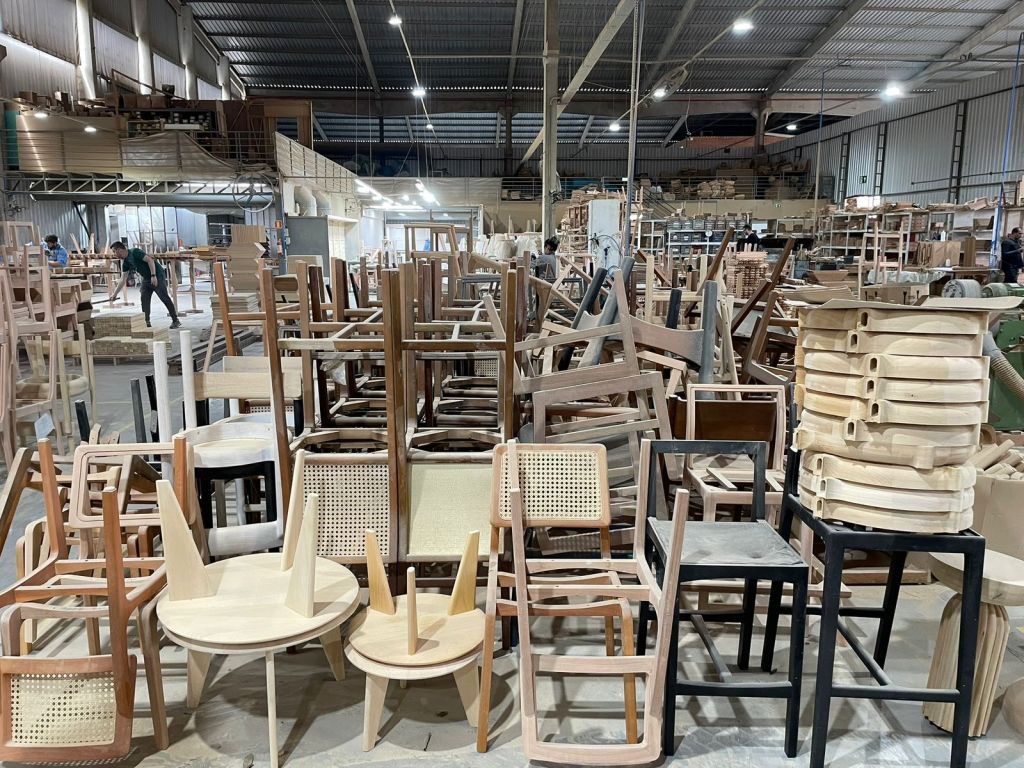
When formulating a sustainable product strategy from Brazil, furniture designers and global buyers must understand the operational distinctions between native Amazonian hardwoods and fast-growing, high-yield plantation timbers. Both material groups offer distinct functional and commercial advantages, but they require entirely different compliance pathways.
+-----------------------------------------------------------------------------------+| BRAZILIAN TIMBER MATERIAL PROFILE |+-----------------------------------------------------------------------------------+| || [NATIVE HARDWOODS] vs. [PLANTATION TIMBERS] || • Species: Jequitibá, Tauari • Species: Eucalyptus, Pine || • Application: Luxury, Indoor Accent • Application: Modular, Outdoor || • System: Strict DOF / Sisflora • System: Simplified Invoices || • Compliance: High Data Verification • Compliance: Rapid Geolocation || |+-----------------------------------------------------------------------------------+
Native Hardwoods: Luxury, Durability, and Complex Compliance
Brazilian native hardwoods are highly sought after by premium retailers and architects due to their extraordinary structural density, stability, and stunning grain patterns.
- Jequitibá (Cariniana pyriformis): Frequently called the “Brazilian Mahogany,” Jequitibá is highly valued for high-end indoor furniture, tables, and cabinetry. It offers a straight grain, a fine texture, and works beautifully with advanced CNC machining.
- Tauari (Couratari guianensis): Known for its elegant light-tan to creamy-pink coloration, Tauari is an industry standard for modern, design-forward chairs and exposed wooden frames. It offers excellent steam-bending properties and accepts stains and finishes flawlessly.
- Freijó (Cordia goeldiana): Often used as an alternative to European Oak or American Walnut, Freijó features a rich golden-brown hue and is highly stable, making it a favorite for mid-century modernist furniture re-editions.
The Compliance Pathway: Native hardwoods require the absolute maximum level of due diligence. Buyers must secure the original PMFS authorization numbers, every historical DOF transport receipt linking the forest to the sawmill and the furniture factory, and the explicit scientific names for customs declarations.
Plantation Timbers: The Scalable, Deforestation-Free Engines
For high-volume, cost-sensitive collections or extensive outdoor product lines, Brazil offers massive, highly industrial agroforestry operations centered on non-native, rapidly renewable plantation species.
- Eucalyptus (Eucalyptus grandis / urophylla): Brazil has perfected the science of sustainable eucalyptus cultivation. Through advanced silviculture techniques, Brazilian eucalyptus plantations achieve some of the highest growth yields globally, reaching maturity in a fraction of the time required in northern climates. When properly kiln-dried and treated, premium Brazilian eucalyptus displays incredible structural strength, high rot resistance, and an attractive, uniform grain that mimics traditional white oak, making it ideal for outdoor lounge sets and structural engineered furniture panels.
- Elliottis Pine (Pinus elliottii): Widely cultivated in the southern states of Brazil, plantation pine serves as the primary substrate for structural plywood, engineered multi-lam veneer lumber (LVL), and flat-packed modular furniture systems.
The Compliance Pathway: Plantation timbers fundamentally streamline the compliance process, especially under the EUDR. Because these forests were established on long-standing, dedicated agricultural lands decades ago, they do not involve the harvesting of native biomes, instantly satisfying the post-2020 deforestation-free mandate. The land plots are fixed, clean, and easily mapped via automated GIS platforms. This drastically reduces the administrative burden of tracking thousands of individual logs through native forest networks, providing a highly automated path to compliance.
Step-by-Step Blueprint: Designing an Air-Tight Compliance Workflow
For an international furniture buyer, establishing a bulletproof compliance workflow requires embedding strict validation gates directly into the standard product development and procurement lifecycle. Compliance cannot be an afterthought handled at the shipping dock; it must be hardcoded into the initial factory onboarding process.
Step 1: Pre-Contract Factory Auditing and Vendor Qualification
Before issuing a single purchase order or wire transfer for prototypes, the buyer must execute a rigorous compliance audit of the manufacturing vendor.
- The Document Request: Demand that the factory submit examples of their recent environmental filings, including their Cadastro Técnico Federal (CTF) registration with IBAMA, which legalizes their operation as a wood-transforming industry.
- Supply Chain Mapping: Require the factory to explicitly name their primary primary sawmills and timber brokers. Validate whether these tier-2 suppliers have active, clean records within the Sisflora or DOF portals, checking for past environmental infractions or pending state blockages.
Step 2: Scientific Verification and Prototyping
During the engineering and sample development phase, collaborate with materials specialists to lock down the raw material taxonomy.
- Botanical Locking: Ensure that the production contract explicitly defines the timber components by their precise scientific genus and species, not vague commercial descriptors.
- Moisture and Structural Stability Testing: Because tropical hardwoods and plantation timbers behave differently under varying relative humidity levels, verify that the factory utilizes computer-controlled kiln-drying protocols, stabilizing the internal wood moisture content to between 8% and 12% to prevent warping or splitting upon arrival in North American or European destination climates.
Step 3: Purchase Order Issuance with Embedded Data Clauses
Modify standard international procurement contracts to include explicit compliance performance metrics.
- The Data Condition: Insert clauses stating that the release of progress payments or final bills of lading is strictly conditional upon the factory delivering complete, validated chain-of-custody documentation.
- Mandatory Submissions: For native wood, this includes the specific electronic DOF keys linked directly to the wood volume allocated for that production run. For plantation timbers, this includes the precise geographic coordinates or polygon shapefiles of the originating estate.
Step 4: Digital Container Onboarding and Quality Assurance
While production is underway on the factory floor, local quality assurance teams must verify both physical construction details and data compliance simultaneously.
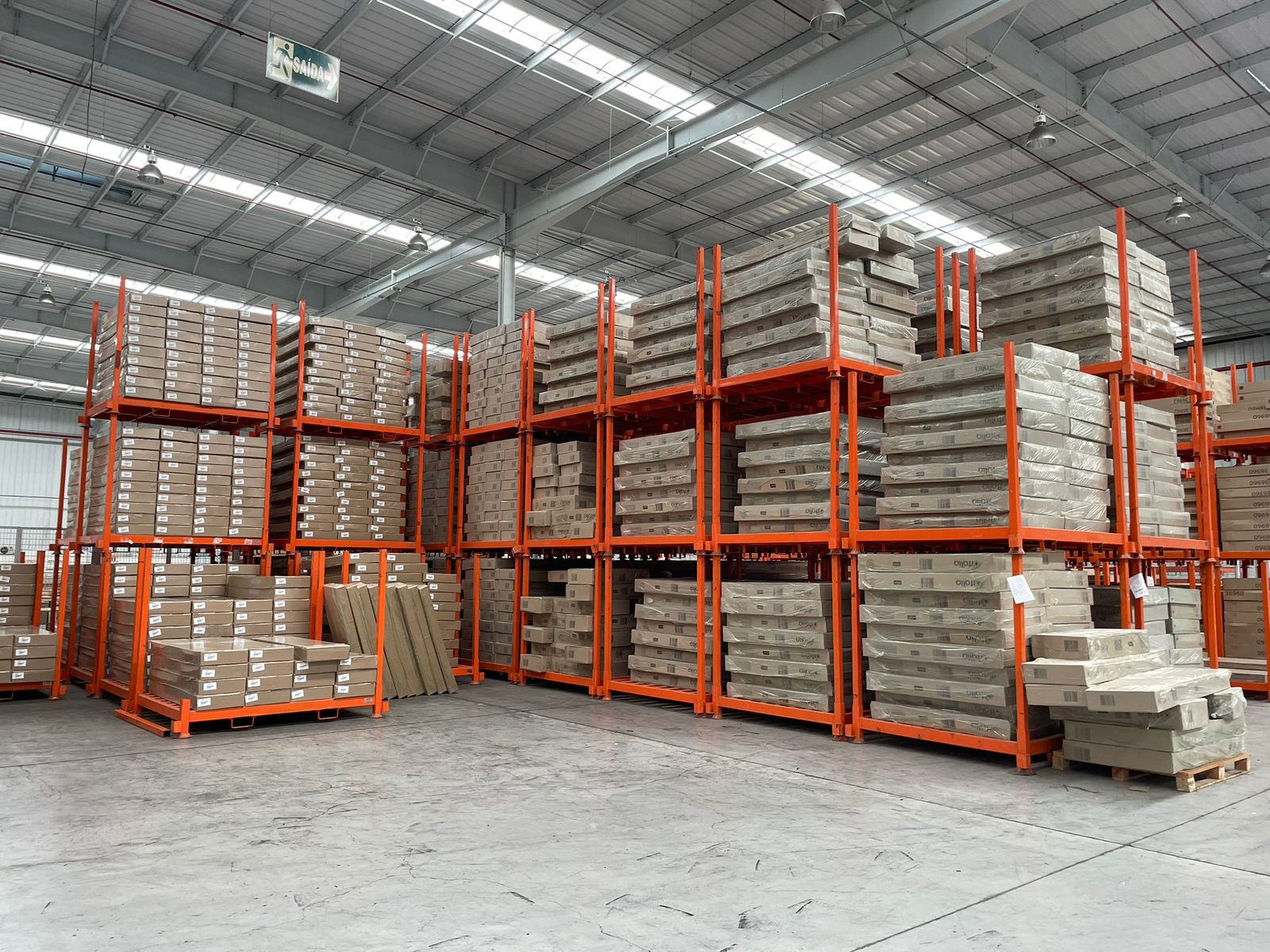
- Batch Separation: Verify that the factory maintains strict physical segregation between the certified timber batches allocated for your export order and unverified wood used for domestic production.
- Cross-Referencing Manifests: Before the container doors are sealed, the factory’s shipping department must generate the export invoice and packing list. The local sourcing team must cross-reference the volume of finished furniture against the digital wood volume declared on the matching forestry transport documents, ensuring perfect mathematical coherence.
Step 5: Advanced Customs Filing and Entry Clearance
Work alongside specialized international customs brokers to submit data well ahead of the vessel’s arrival at the destination port.
- U.S. Entries: File the PPQ Form 505 digitally via the Automated Commercial Environment (ACE) portal, ensuring the scientific names match the factory’s technical sheets identically.
- EU Entries: Submit the full geolocation polygon coordinates and the deforestation-free declaration to the centralized EUDR registry, securing the mandatory Due Diligence Statement (DDS) reference number to be included on the customs entry manifest.
Operational Excellence: Bridging High Design and Global Regulations
Navigating this intricate matrix of digital forestry ledgers, strict customs requirements, and advanced structural manufacturing details is incredibly difficult to execute from a corporate office thousands of miles away. Misinterpreting a single DOF document or submitting an incorrect botanical name can stall an entire container at port, racking up devastating demurrage charges and fracturing retail inventory flows.
This operational friction is precisely why leading global furniture platforms, enterprise retailers, and design brands are partnering with specialized, on-the-ground development structures. Vista Furniture Co. was built to solve these exact systemic vulnerabilities, combining a deep legacy in high-end furniture retail with an agile, tech-driven sourcing infrastructure.
+-----------------------------------------------------------------------------------+| VISTA END-TO-END sourcing SOLUTION |+-----------------------------------------------------------------------------------+| || [DESIGN / TECH] ---> Trend Scouting -> Customization -> Prototyping || | || v || [OPERATIONS] ---> Factory Onboarding -> Strict QA -> Local Management || | || v || [COMPLIANCE] ---> Legal Validation -> Geolocation Data -> Digital Custody || | || v || [LOGISTICS] ---> FOB, CIF, DDP Export Logistics via Premium Partners || |+-----------------------------------------------------------------------------------+
The Vista Advantage: Retail Roots Meet Materials Science
Vista was established by the founders of MUMA, one of Brazil’s most prominent and award-winning design furniture marketplaces. With more than a decade of experience selling premium, designer-led furniture directly to consumers, managing multiple physical showrooms, and scaling a high-traffic e-commerce ecosystem, the team developed an intimate knowledge of what makes a product commercially successful. They understand that a beautifully designed chair is only as good as its structural integrity, its packaging durability, and its legal compliance trail.
To drive this platform, Vista brings an extraordinary, interdisciplinary management edge to the table:

- Matheus Ximenes (Managing Director): An architect and seasoned home-and-living entrepreneur with more than 20 years of hands-on experience in product curation, retail operations, and factory governance. His deep alignment with Brazil’s top-tier manufacturers ensures immediate access to the country’s most reliable, high-capacity factories.
- Diego Ortiz, Ph.D. (Managing Partner): Holding a Doctorate in Materials Science and an extensive background in big data engineering and technology infrastructure. Dr. Ortiz directly oversees the integration of data systems, automated tracking, and logistics optimization at Vista. This scientific and analytical focus translates into a meticulous, tech-enabled approach to supply chain validation, helping global buyers automate and de-risk the entire timber compliance process.
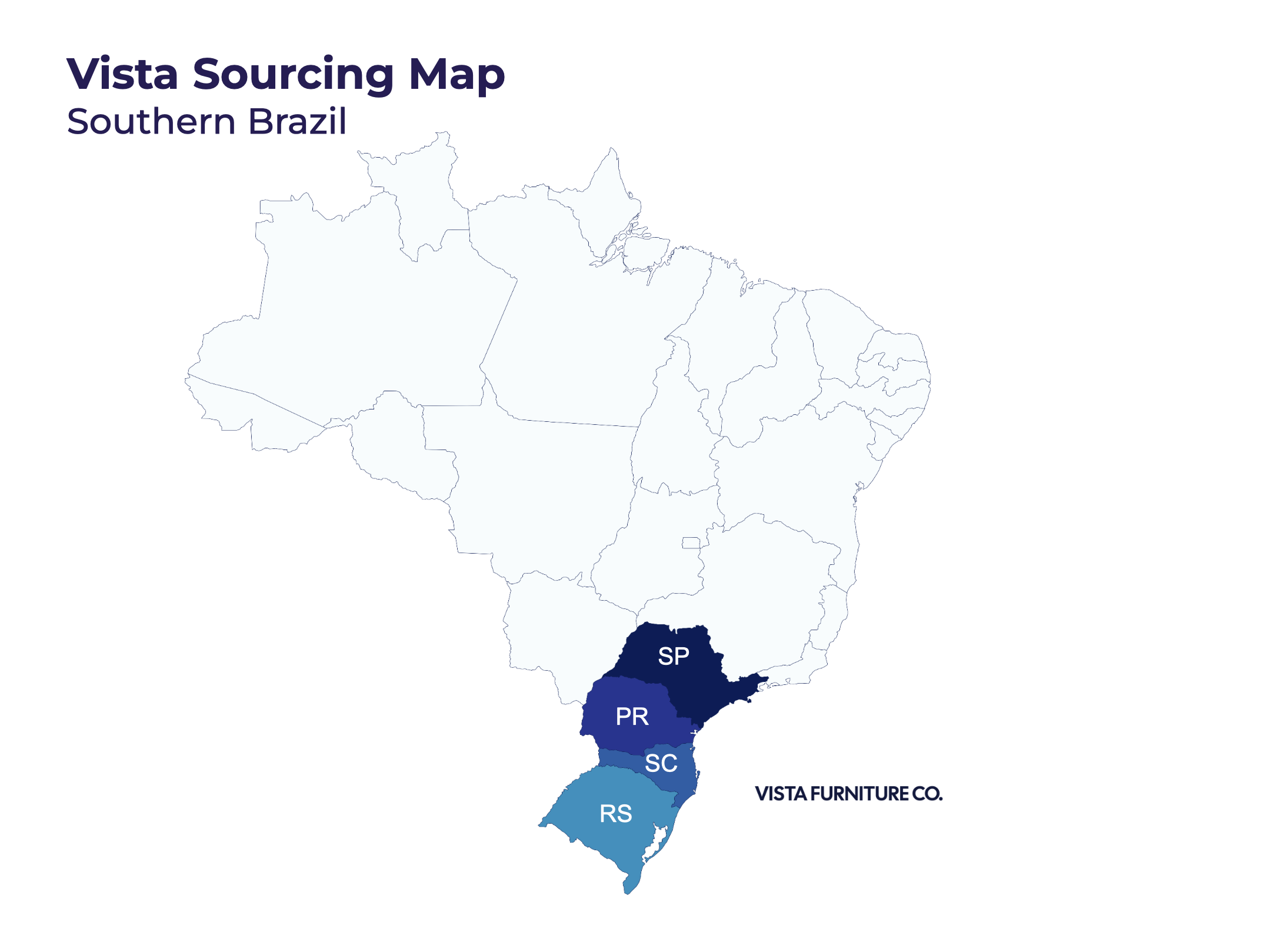
Operating directly from São Paulo—the economic heart of Brazil—with an operational footprint that extends across all major manufacturing clusters, Vista acts as the buyer’s permanent, localized team. The platform manages the entire product lifecycle: scouting emerging trends, adapting designs for international markets, coordinating factory onboarding, overseeing strict quality control from prototype to pallet, and handling complex multi-incoterm export logistics (FOB, CIF, DDP) alongside premium global freight forwarding networks. By embedding data verification and legal compliance directly into their daily operations, Vista transforms regulatory compliance from a complex commercial risk into a powerful, streamlined competitive advantage.
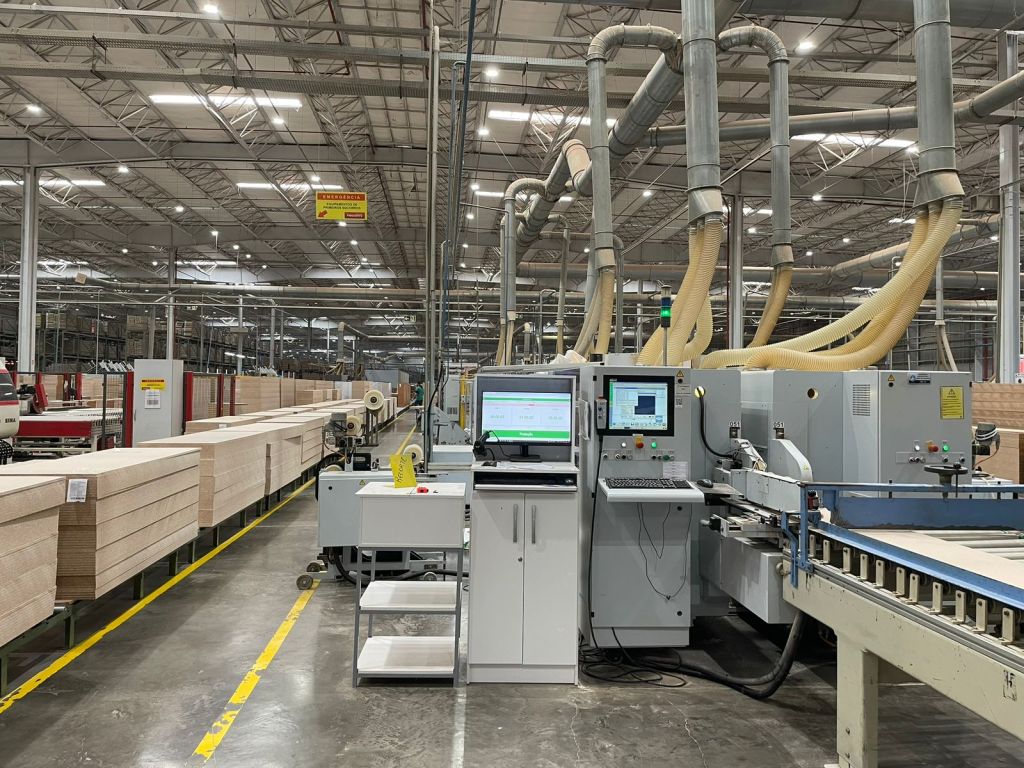
Conclusion: Turning Compliance into a Strategic Advantage
In the modern era of international trade, supply chain transparency has ceased to be an optional marketing narrative or a minor administrative checkbox. Under the powerful, enforcement-backed regimes of the U.S. Lacey Act and the European Union Deforestation Regulation (EUDR), rigorous data compliance is a foundational requirement for corporate survival. The days of detached, unverified purchasing are over.
For forward-thinking furniture brands, this regulatory shift represents a major opportunity. While competitors struggle with fragmented supply chains, opaque supplier networks, and the constant threat of border seizures, those who establish an air-tight, digitally integrated procurement framework can operate with absolute market speed. Brazil offers the ultimate macroeconomic solution: competitive standard import duties, unparalleled access to sustainable plantation and rich native timbers, and a highly advanced digital tracking infrastructure.
By leveraging an on-the-ground, tech-driven development and sourcing partner like Vista Furniture Co., international enterprise buyers completely eliminate the operational headaches traditionally associated with cross-border procurement. Vista’s unique blend of design heritage, materials science expertise, and automated supply chain validation provides global retailers with an optimized path to scale premium, compliant collections from Brazil with total security and peace of mind.
External References for Compliance Officers
- U.S. Department of Agriculture (APHIS) – Lacey Act Portal: Official guidelines, scientific genus/species lookup tools, and electronic PPQ Form 505 filing compliance requirements. https://www.aphis.usda.gov
- European Commission – EUDR Implementation Platform: Official regulatory texts, multi-language compliance FAQs, and direct access to the centralized EU Deforestation Registry. https://environment.ec.europa.eu
- IBAMA – Federal Ministry of Environment (Brazil): Central portal for validating Document of Forest Origin (DOF) verification keys and checking corporate environmental registrations. https://www.gov.br/ibama
- Forest Stewardship Council (FSC) Brazil: Official database for verifying third-party chain-of-custody certifications and identifying certified sustainable forestry concessions. https://fsc.org
About the Blog & Vista Furniture Co.
Editor-in-Chief, BrazilFurniture.com We publish data-driven industry intelligence, macroeconomic analyses, and practical operational guides designed to help global enterprise brands, volume retailers, and high-growth DTC platforms successfully navigate the procurement, manufacturing, and design landscapes of South America.
In Operational Partnership with Vista Furniture Co. Bred from the retail success, technological core, and design curation of MUMA—one of Brazil’s leading contemporary furniture marketplaces—Vista Furniture Co. operates as a specialized, boutique sourcing and full-scale product development engine with global execution capabilities. Managed by architect and home-and-living industry veteran Matheus Ximenes along with tech infrastructure and materials science expert Diego Ortiz, Ph.D., Vista integrates advanced data management, rigorous local quality control, and certified logistics to build seamless, risk-free export collections for international partners. From initial technical prototyping to comprehensive timber chain-of-custody documentation, Vista scales your production lines from Brazil with absolute operational clarity.
- Corporate Intake & Inquiry: hello@vista-furniture.com
- Digital Presentation & Capabilities: vista-furniture.com
- Instagram: @vista.furniture.co
- Youtube: https://www.youtube.com/@VistaFurnitureCo

 Brazilian Furniture Sourcing Hub
Deixe um comentário