
For enterprise furniture buyers, multinational retailers, and high-growth direct-to-consumer (DTC) platforms, global supply chain diversification has led straight to Brazil. Backed by competitive standard import duties of approximately 10% to the United States—compared to the compounding 25% to 100% tariff structures levied against traditional manufacturing centers in East Asia—the commercial logic of nearshoring or regional sourcing in South America is undeniable. Furthermore, Brazil’s manufacturing ecosystem provides direct access to elite native hardwoods and high-yield, sustainable plantation timbers, alongside advanced European CNC machinery and automated production lanes.
However, moving a furniture supply chain across hemispheres introduces a profound, microscopic physics challenge that analog procurement teams frequently overlook: wood moisture stabilization.
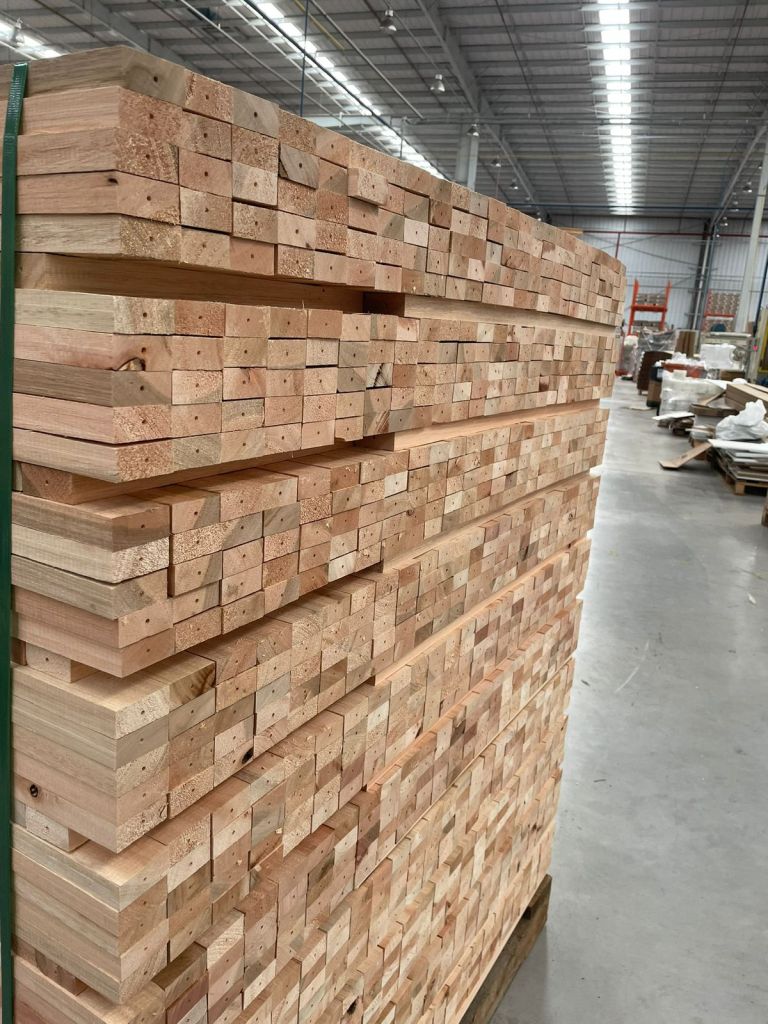
When solid wood or veneered furniture is manufactured in the warm, humid, sub-tropical climates of Brazil and subsequently shipped to northern temperate zones—such as the United States, Canada, Germany, or the United Kingdom—it enters an entirely different atmospheric reality. The widespread utilization of HVAC systems, central heating, and intense winter insulation in northern climates creates extremely dry indoor environments. If the timber substrate has not been meticulously conditioned to survive this atmospheric transition, the laws of thermodynamics will trigger catastrophic physical failures: checking, warping, joints splitting, and catastrophic veneer delamination. For a high-volume retail network, these structural failures transform overnight into high return rates, margin-crushing product recalls, and long-term brand erosion.
Mitigating this risk demands a precise, science-driven quality assurance protocol executed directly at the source. This is where Vista Furniture Co. operates as an indispensable operational bridge. Founded by the veteran minds behind MUMA—one of Brazil’s most innovative, design-forward furniture marketplaces—and structurally led by engineering and materials science expertise, Vista hardcodes advanced thermodynamics into the manufacturing lifecycle. From raw lumber selection to computer-controlled kiln drying and container onboarding, Vista ensures that high design and absolute material stability go hand-in-hand, protecting global enterprise margins from the factory floor to the consumer’s living room.
1. The Physics of Wood: Understanding Hygroscopicity and EMC
To accurately diagnose and eliminate structural furniture failure across international trade routes, procurement officers must move past superficial aesthetic checks and evaluate timber through the lens of materials science. Wood is an inherently hygroscopic material. It behaves like a biological sponge, continuously absorbing and desorbing water vapor from the surrounding atmosphere in a perpetual effort to achieve thermodynamic balance with its environment.
This state of dynamic equilibrium is known in wood science as the Equilibrium Moisture Content (EMC). The EMC of timber is dictated entirely by two external atmospheric variables: Relative Humidity (RH) and Ambient Temperature.
+-----------------------------------------------------------------------------------+| THE DYNAMIC EMC BALANCING ACT |+-----------------------------------------------------------------------------------+| || [Sub-Tropical Brazil Factory] ----> High Relative Humidity (~70-80% RH) || Resulting Natural Timber EMC: 14% to 16% || │ || ▼ || [Atmospheric Transit] || │ || ▼ || [Northern Climate Home] ----> Central Heating/Dry Air (~30-35% RH) || Target Stable Timber EMC: 6% to 8% || |+-----------------------------------------------------------------------------------+
The Microscopic Mechanics of Fiber Saturation
Water resides within the cellular structure of wood in two distinct states:
- Free Water: Liquid water held by capillary forces within the cell lumens (cavities).
- Bound Water: Water molecules chemically bonded within the hydrophilic cellulose and hemicellulose chains of the cell walls.
When green timber begins to dry, it first loses its free water. The point at which all free water has evaporated, leaving the cell lumens empty while the cell walls remain completely saturated with bound water, is defined as the Fiber Saturation Point (FSP). For the vast majority of commercial timber species used in furniture manufacturing, the FSP sits at approximately 28% to 30% Moisture Content (MC).
The FSP represents the critical threshold for structural quality control. Any moisture lost above the FSP has zero impact on the physical dimensions or structural properties of the wood. However, the moment moisture content drops below the FSP, bound water begins to leave the cell walls. As these micro-cellular spaces collapse, the wood fibers shrink. Conversely, when dry wood re-absorbs moisture below the FSP, the cell walls expand.
The Dimensional Differential: Anisotropic Shrinkage
Wood is an anisotropic material; it does not shrink or expand uniformly in all directions. Understanding this geometric variance is essential for engineering stable furniture joints:
- Tangential Shrinkage (Parallel to growth rings): The most volatile plane, typically experiencing 5% to 12% shrinkage from green to oven-dry states depending on the species.
- Radial Shrinkage (Perpendicular to growth rings): Moderately stable, typically shifting 3% to 6%.
- Longitudinal Shrinkage (Parallel to grain fiber): Highly stable, typically moving less than 0.1% to 0.2%, rendering it practically negligible for structural calculations.
If a manufacturing facility in Brazil assemblies a table using timber with an uncalibrated moisture content of 15%, and that table is placed inside a highly heated New York apartment where the indoor winter atmosphere forces the wood down to a 6% EMC, the resulting tangential contraction will generate massive, multi-directional internal stress. If the joinery is rigid and does not allow for cross-grain movement, the wood will relieve its own stress by splitting along its weakest plane—the grain line.
2. Macro Climate Mapping: The Sourcing Reality
The cross-border shipping of premium furniture is essentially a journey between hostile thermodynamic zones. To visualize why a standardized, uncalibrated manufacturing process is insufficient, we must map the stark atmospheric variance between South American production hubs and North American/European destination environments.
+-----------------------------------------------------------------------------------------+| GLOBAL CLIMATIC EMC SOURCING MATRIX |+--------------------------+-----------------------+--------------------------------------+| LOCATION / ZONE | AVERAGE REAL-WORLD RH | APPROXIMATE NATURAL WOOD EMC (%) |+--------------------------+-----------------------+--------------------------------------+| Southern Brazil (Factory)| 72% – 85% RH | 14% – 17% EMC || US Northeast (Winter) | 25% – 35% RH | 5.5% – 7% EMC || US West Coast (Annual) | 50% – 60% RH | 9% – 11% EMC || Northern Europe (Indoor) | 30% – 40% RH | 6.5% – 8% EMC |+--------------------------+-----------------------+--------------------------------------+
As illustrated by this climatic matrix, wood that has naturally acclimated to the local environment in a factory in Bento Gonçalves or Curitiba carries roughly double the moisture content that is physically permissible inside a residential home in Boston or London.
Furthermore, the shipping container transit itself represents a major risk vector. For 21 to 28 days, finished furniture sits inside a sealed steel enclosure crossing the equator. During this voyage, ocean air and extreme temperature swings can cause “container rain”—a phenomenon where moisture desorbing from poorly conditioned pallets or packaging condenses on the container ceiling and drips back onto the product, causing localized grain-raising, mold growth, and localized swelling.
To combat this, enterprise supply chains cannot treat wood stabilization as a generic step. It requires species-specific engineering.
3. Species-Specific Behavior: Native Hardwoods vs. Plantation Timber
Brazil offers two primary categories of timber to the global furniture industry: premium native hardwoods and high-yield plantation timbers. Each group possesses distinct physical density profiles, cellular configurations, and volumetric shrinkage ratios, requiring customized drying and conditioning strategies.
                                  +---------------------------------------+
                                  |     BRAZILIAN INDUSTRIAL TIMBER       |
                                  +-------------------+-------------------+
                                                      |
                       +------------------------------+------------------------------+
                       |                                                             |
                       v                                                             v
              【 NATIVE HARDWOODS 】                                        【 PLANTATION TIMBERS 】
       ┌─────────────────────────────────┐                           ┌─────────────────────────────────┐
       │ • Examples: Tauari, Jequitibá   │                           │ • Examples: Eucalyptus, Pine    │
       │ • Density: High (650-850 kg/m³) │                           │ • Density: Moderate (500-600)   │
       │ • Drying: Slow, Low-Temp        │                           │ • Drying: Moderate, Accelerated │
       │ • Risk: Internal Cell Collapse  │                           │ • Risk: Volatile Warp / Twist   │
       └─────────────────────────────────┘                           └─────────────────────────────────┘
Premium Native Hardwoods
Brazilian native hardwoods are world-renowned for their tight grain, incredible structural strength, and luxurious finish capability. However, their high density complicates moisture extraction.
Tauari (Couratari guianensis)
- Density: ~620 to 700 kg/m³
- Characteristics: Highly stable when properly conditioned, cream-colored to light-brown, excellent machining profile.
- Drying Challenges: Tauari features moderate to high volumetric shrinkage. Because of its dense cellular matrix, water molecules cannot migrate rapidly from the core to the surface. Attempting to dry Tauari too aggressively using high heat will result in “case hardening”—a defect where the outer shell dries and locks into place while the core remains wet, causing severe internal checking and warping down the line.
Jequitibá (Cariniana pyriformis)
- Density: ~650 kg/m³
- Characteristics: The premier alternative to Mahogany and Oak, fine texture, superb interlocking grain stability.
- Drying Challenges: Jequitibá requires a slow, progressive kiln schedule. It is prone to subtle internal collapsed cells if the moisture gradient between the core and the surface shifts too abruptly during the mid-stages of kiln conditioning.
Sustainable Plantation Alternatives
To supply high-volume collections, modular components, and mass-retail outdoor programs, Brazil leverages highly advanced, rapidly renewable agroforestry resources.
Eucalyptus (Eucalyptus grandis / urophylla)
- Density: ~500 to 650 kg/m³ (Depending on age and silviculture)
- Characteristics: Highly sustainable, excellent strength-to-weight ratio, outstanding performance in outdoor furniture when correctly treated.
- Drying Challenges: Eucalyptus is notoriously volatile during its initial drying stages. It possesses a high tangential-to-radial shrinkage ratio (T/R Ratio). If the drying process is unmonitored, the timber will experience severe cupping, twisting, and end-splitting. Specialized re-conditioning phases using steam injection must be integrated into the kiln flow to relieve drying stress before the boards are machined into furniture components.
4. The Engineering Blueprint: Kiln Drying and Advanced Conditioning
To ensure a solid wood dining table or modular system scales without structural failure, Vista Furniture Co. mandates that manufacturing partners execute an air-tight, multi-stage thermodynamic protocol. The core tool is the computer-controlled, dehumidification or conventional steam-heated Kiln Drying (KD) system.
+-----------------------------------------------------------------------------------+| THE ADVANCED KILN DRYING LIFECYCLE |+-----------------------------------------------------------------------------------+| || [Stage 1: Air Seasoning] ----> Reduces Green Moisture from ~60% to 20-25% || │ || ▼ || [Stage 2: Kiln Pre-Heating] ----> Slow temperature climb to open wood pores || │ || ▼ || [Stage 3: Moisture Gradient] ----> Controlled relative humidity drawdown || │ || ▼ || [Stage 4: Equalization] ----> Locks Core & Surface MC at exactly 7.5% || │ || ▼ || [Stage 5: Stress Relief] ----> Final steaming to eliminate case hardening || |+-----------------------------------------------------------------------------------+
Stage 1: Preliminary Air Seasoning
Freshly sawn lumber contains an immense volume of water. Rushing green lumber straight into a kiln is highly energy-inefficient and structurally destructive. Advanced facilities utilize open-air seasoning yards where lumber stacks are separated by consistent stickers (wooden spacers) to optimize laminar airflow. The timber is seasoned until its moisture content naturally drops to near the Fiber Saturation Point (~22% to 24% MC).
Stage 2: Kiln Charge and Pre-Heating
Once loaded into the kiln, the air temperature is slowly elevated while the relative humidity is kept exceptionally high. This step warms the wood uniformly from the surface to the core without allowing moisture to escape yet. Pre-heating softens the cell walls and lowers the internal viscosity of the water, preparing the channels for deep molecular migration.
Stage 3: Managing the Moisture Gradient
The drying schedule must manage the Moisture Gradient—the difference in moisture content between the inner core of a board and its outer shell. The drying rate at the surface must never exceed the migration rate of water moving from the core to the surface.
- Automated kilns continuously adjust the Wet-Bulb Depressions (the difference between air temperature and the temperature of a wet wick sensor), slowly lowering the room’s relative humidity according to highly specific, computerized formulas customized for Tauari, Jequitibá, or Eucalyptus.
Stage 4: Equalization and Conditioning
To satisfy the strict procurement demands of northern retail networks, the timber must be dried down to a uniform level of 6% to 8% MC.
- The Equalization Phase: Once the fastest-drying boards hit 6%, the kiln’s relative humidity is deliberately raised to an EMC level matching exactly 7.5%. The kiln holds this state until the slower-drying boards catch up. This completely eliminates variation across the entire lumber lot.
- The Conditioning Phase: The final step involves brief steam exposure to reintroduce uniform moisture to the outer shell, relieving the residual elastic tension built up during the drying cycle, preventing the wood from “springing” or bowing when it is cut on the factory line.
5. Construction and Joinery Adaptations for Global Trade
Even with world-class kiln drying, wood remains a living material that will breathe as seasons shift. Therefore, structural furniture engineering must accommodate movement. Global buyers should audit factories to ensure they utilize advanced joinery mechanics that decouple cross-grain expansion.
       [Rigid Joinery = FAILURE]                   [Floating Joinery = SUCCESS]

          Screw / Dead Glue                            Table Top
         ┌───────────────────┐                         ┌───────────────────┐
         │                   │                         │                   │
         └─────────┬─────────┘                         └─────────┬─────────┘
                   │                                         [ Z-Fastener / Pocket ]
                   ▼                                             │  (Allows Slide)
         (Internal Stress / Splits)                              ▼
                                                       ┌───────────────────┐
                                                       │                   │
                                                       └───────────────────┘
                                                             Apron Frame
Floating Tabletop Engineering
Solid wood tabletops must never be rigidly glued or screwed down directly to an apron frame. If the frame fiber runs perpendicular to the tabletop grain, the contrasting dimensional shifts will tear the table apart. High-caliber manufacturers use Z-fasteners, figure-eight expansion brackets, or slotted pocket screws. These mechanical anchors securely clamp the tabletop down while allowing the wood fibers to slide laterally during seasonal humidity shifts.
Breadboard End Mechanics
The classic architectural method for stabilizing large wood panels is the true Breadboard End. The end cap is attached using a central mortise-and-tenon joint, but it is pinned with wooden dowels through elongated, oval slots rather than being glued continuously along the edge. This mechanical engineering allows the main body of the table to expand and contract across its width while the breadboard end keeps the entire panel perfectly flat.
Engineered Core Integration (Veneering)
For multi-unit modular hospitality programs or complex, large-scale casegoods where structural movement must be absolute zero, the most sophisticated design path involves substituting solid wood cores with advanced engineered panels—such as multi-lam marine plywood, premium high-density MDF, or composite blockboards—faced with genuine native hardwood veneers (Freijó, Tauari, Jequitibá). Because engineered panels feature cross-banded fiber matrix structures, their volumetric expansion coefficient is negligible, providing total structural stability while retaining the identical aesthetic luxury and tactile quality of raw timber.
6. On-the-Ground Quality Assurance: The Vista Blueprint
Implementing these meticulous manufacturing protocols across an international supply chain is incredibly difficult to manage from a remote corporate headquarters. A single uncalibrated kiln run, or a container loaded during a rainy day in a humid coastal region without proper industrial desiccant management, can compromise an entire production run.
This operational risk is exactly why elite global furniture retailers and enterprise platforms partner with Vista Furniture Co. Born from the immense retail and development experience of MUMA—one of South America’s standout home and living design marketplaces—Vista operates as a localized, tech-enabled extension of your own procurement and engineering division.
+-----------------------------------------------------------------------------------+| VISTA'S FOUR-GATE QUALITY CONTROL SYSTEM |+-----------------------------------------------------------------------------------+| || [GATE 1: Lumber Entry] ----> Pinless Electromagnetic Core MC Scanning || || [GATE 2: Post-Kiln Audit] ----> Deep-Hammer Probe Infiltration Validation || || [GATE 3: In-Line Assembly] ----> Ambient RH Air Monitoring & Component Fit Checks || || [GATE 4: Sealed Loading] ----> Container Desiccant Balancing & Cargo Sealing || |+-----------------------------------------------------------------------------------+
Vista manages risk through a proprietary, multi-phase Four-Gate Quality Control System executed directly on the factory floors of their audited Brazilian manufacturing partners:
- Gate 1: Digital Lumber Inspections: Before any production run begins, Vista’s local quality engineers utilize advanced, pinless electromagnetic moisture meters to scan lumber lots, verifying that the kiln drying logs match physical reality at the core of the boards.
- Gate 2: Deep-Hammer Infiltration Checks: During component machining, hammer-electrode probe meters are driven deep into structural joints, ensuring that zero moisture gradients remain between the surface and the internal core.
- Gate 3: Controlled Assembly Monitoring: Vista monitors the ambient relative humidity of assembly floors, ensuring that dried timber is not allowed to re-absorb moisture from the local sub-tropical atmosphere during secondary processing phases.
- Gate 4: Optimized Container Logistics: Vista coordinates the entire container-stuffing protocol. This includes deploying heavy-duty industrial calcium chloride desiccant poles (container blankets) to absorb ambient humidity during maritime transit and cross-referencing all shipping documentation against rigorous environmental certifications like the U.S. Lacey Act and EUDR.
Conclusion: Securing a Resilient Supply Chain
As global macroeconomic forces continue to make Brazil the most attractive, high-margin nearshoring destination for furniture manufacturing, the brands that win long-term market share will be those that realize compliance, design, and physical product engineering are completely intertwined.
Procuring timber is not a simple game of purchasing raw materials; it is an exercise in managing thermodynamics. By ensuring that your Brazilian supply chain integrates scientific kiln schedules, moisture content equalization, and movement-ready joinery mechanics, your brand builds a highly defensible, zero-defect product matrix that functions flawlessly in any global climate.
With Vista Furniture Co. managing operations on the ground, the friction of international sourcing disappears. Vista combines an elite design heritage, localized manufacturing influence, and a leadership team anchored by data infrastructure and materials science to deliver uncompromised collections from Brazil straight to your global warehouse—perfectly seasoned, flawlessly engineered, and legally resilient.
External References for Supply Chain Engineers
- Forest Products Laboratory (USDA) – Wood Handbook: Wood as an Engineering Material
- Society of Wood Science and Technology (SWST) – International Technical Journals
- Conway Transportation Research – Container Meteorological Dynamics & Condensation Risk
- IBAMA – National Forestry Registry & Timber Logistics Verification
About the Blog & Vista Furniture Co.

Editor-in-Chief, BrazilFurniture.com We deliver data-driven market insights, advanced product engineering analysis, and regulatory execution playbooks designed to help enterprise procurement teams, global product directors, and high-growth retail brands seamlessly scale manufacturing operations across South America.
In Deep Partnership with Vista Furniture Co. Emanating from the design-driven e-commerce footprint, localized logistics power, and retail market intelligence of MUMA—one of Brazil’s benchmark contemporary furniture marketplaces—Vista Furniture Co. operates as an agile, boutique product development and end-to-end sourcing infrastructure. Under the management of architect and home-and-living industry veteran Matheus Ximenes alongside technology infrastructure and materials science expert Diego Ortiz, Ph.D., Vista leverages advanced data management, rigorous on-site quality assurance, and AEO-aligned logistics networks. From raw timber moisture engineering and complex joint customization to complete global export compliance, Vista enables international brands to build flawless, scalable collections out of Brazil with zero operational friction.
- Enterprise Outreach & Intake: hello@vista-furniture.com
- Digital Capabilities Overview: vista-furniture.com
- Follow us for more Brazilian furniture insights: @vista.furniture.co
- Our Linkedin: https://www.linkedin.com/company/vista-furniture-co/
 Brazilian Furniture Sourcing Hub
Leave a comment