
The 25% Brazil Tariff Won’t Send Furniture Buyers Back to Asia. Here’s Why.
On July 22, a 25% tariff takes effect on Brazilian goods entering the United States, imposed under Section 301 of the Trade Act of 1974. Coffee, beef, orange juice, aircraft parts and more than 1,600 other product categories were carved out. Solid wood furniture was not.
The reflexive move this week will be to read this as a signal to pull sourcing back to Asia. That reading is a decade out of date. Vietnam, China, Mexico, India: every meaningful furniture origin now sits inside a tariff regime of one shape or another. The moment when a buyer could relocate a program to escape duty has passed. There is no low-tariff country left.
So the tariff does not make Brazil expensive against a cheaper alternative, because the duty-free alternative no longer exists. What it does is move the decision off price and onto the three questions that were always harder to answer: compliance exposure, supply chain resilience, and category fit. Landed cost still matters. It is now one input among several, not the whole equation.
What the tariff covers, and what it leaves out
The exemption list is long and revealing. Coffee, beef, oranges and orange juice, iron ore, rare earths, energy products, aircraft and parts: the categories Washington chose to protect are consumer staples and inputs its own factories depend on. What that leaves exposed is manufactured goods. Brazilian officials have named timber, ornamental stone, textiles and footwear among the most affected sectors. For a US buyer importing solid wood furniture, the relevant fact is simple. There is no carve-out for the category. The Section 301 duty applies, and it applies from July 22.
This holds across furniture regardless of material. Panel, MDF, upholstered and ready-to-assemble lines are exposed too, and as the next section shows, several of them carry a heavier total load than solid wood. The focus on solid wood in this analysis is about where Brazil competes, not about what the tariff reaches.
The 25% is a floor, not a ceiling
The headline number is not the number a buyer pays. The Section 301 duty stacks on top of tariffs that already applied to a given product, so the total landed rate depends entirely on the tariff classification. In several furniture categories the combined load runs well above 25 percent.
Brazilian industry estimates put the picture roughly like this. Solid wood furniture, which was largely duty-free before, now carries close to the 25 percent surcharge and little else. Upholstered wood furniture sits among the most exposed, with a combined load estimated between 50 and 55 percent. Plywood and wood panels, a core input for the whole industry, land somewhere around 38 to 43 percent once existing duties are added. Leather, a key upholstery material, stays exempt.
Read that spread carefully, because it changes the competitive map inside Brazil itself. The categories where Brazil competes on price, upholstery and panel goods, take the heaviest hit. Solid hardwood, where Brazil competes on species, joinery and certification, comes off comparatively better. It starts from a base that was exempt and now carries the surcharge alone. The tariff does not just separate Brazil from other origins. It separates one Brazilian category from another.
Where Brazil’s solid wood industry actually sits
Brazil’s competitive position is specific rather than general. The strength is not cheap labor. It is certified solid hardwood, traceable material, and a manufacturing base concentrated in Santa Catarina, around São Bento do Sul, that has built its output on solid wood rather than panel substitutes. This is the densest cluster of solid-wood furniture manufacturing in the country, and it is not where the upholstery and panel factories of Rio Grande do Sul sit.
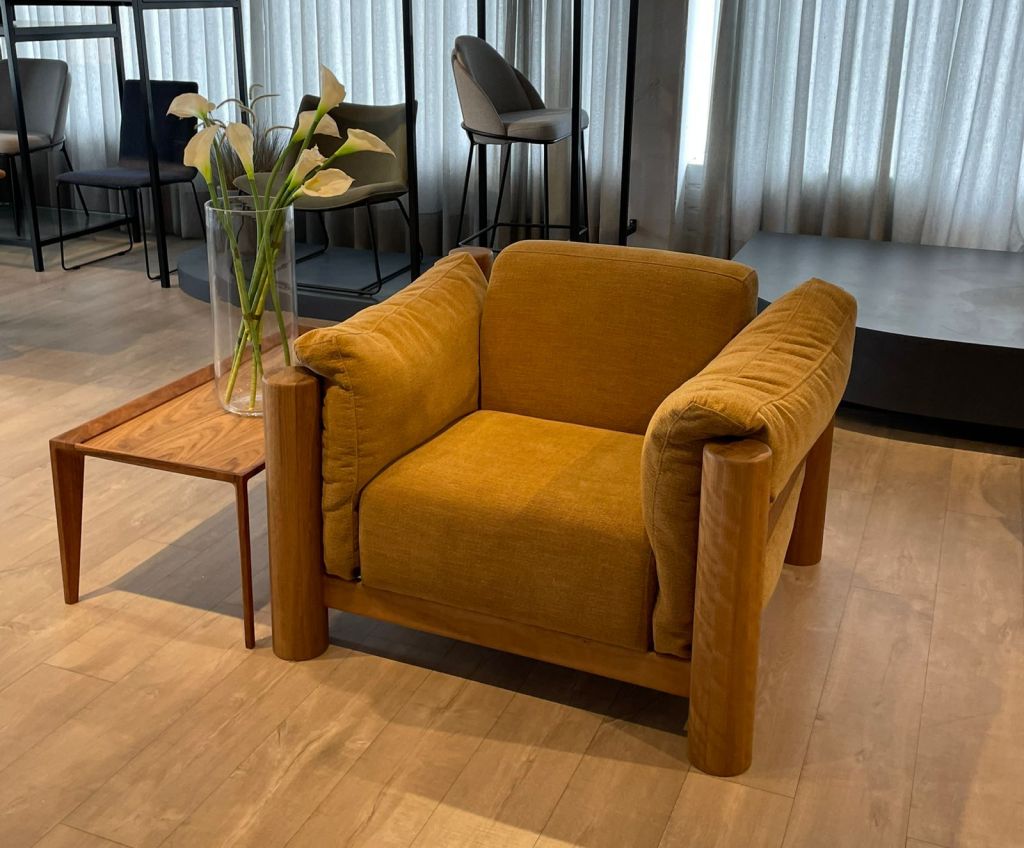
Species such as Tauari are part of that base, worked as solid timber rather than veneer over composite. For buyers who need chain-of-custody documentation and FSC or CARB / TSCA Title VI compliance, that traceability is a concrete advantage, and it holds regardless of where the tariff line falls. Confirming it is not a desk exercise. It is what Vista verifies on the factory floor, because a certificate and a production line are two different claims.
Brazil, Vietnam and Mexico under the new map
The old sourcing logic ranked origins by landed cost, and tariff arbitrage was the lever. That lever is gone. Vietnam absorbed much of the shift away from China and now carries its own exposure. Mexico offers proximity and nearshoring speed, with a different compliance and capacity profile for solid hardwood. China is moving up the value chain, not retreating from it. None of these origins is a duty-free escape hatch anymore.
What separates them now is not who is cheapest. It is who fits a given category, who can document compliance, and who can hold lead times through disruption. That is a harder comparison than a price sheet, and it is the comparison that actually protects a program. A closer look at the real cost of manufacturing furniture in Brazil versus Asia shows why the cheapest sticker rarely wins once the full landed picture is drawn. Brazil earns its place on solid wood, species range and certification, not on cost substitution.
Which categories Brazil serves, and which it does not
Brazil is not the answer for every furniture category, and pretending otherwise would be a disservice. Price-led ready-to-assemble lines, high-volume flat-pack furniture and much of the upholstery segment are better served elsewhere, and the stacking math above is part of why. Where Brazil competes is solid hardwood: dining, case goods, seating frames, bathroom vanities in solid wood, pieces where joinery, species and finish carry the value. The work is knowing which category the tariff genuinely reshapes and which it barely touches, before committing to samples, travel or a purchase order.
One case, several grounds, and a variable still moving
The Section 301 case spans several areas, from digital trade and electronic payments to ethanol market access and illegal deforestation. Deforestation is one of them, not the whole case, and no single item is the driver. Reading the measure as a single-issue action misses how it was built.
One variable is still moving, and it sits apart from the 25%. A separate US investigation, into forced-labor enforcement, could add a further duty on top, with a decision expected in the days ahead. The figure is not yet fixed. That uncertainty is the point. It rewards buyers who decide with a method and punishes those who react to each headline as it lands.
How to structure the decision now
The buyers who come out of this well will not be the ones who move fastest. They will be the ones who move in the right order. Confirm the tariff classification for the specific category, because that number, not the headline, is what lands. Map which origins genuinely fit that category on compliance and capacity, not on last year’s price. Qualify factories against documentation they can actually produce, FSC certificates, chain-of-custody records, CARB / TSCA Title VI test reports, before a single sample ships. Verify in person before a purchase order, because a certificate on paper and a factory floor are not the same claim. This is the sequence Vista runs for buyers sourcing from Brazil, built so the decision holds up after the headlines move on.
The bottom line
The tariff does not remove Brazil as an origin. It raises the cost of choosing the wrong factory, in a market where every origin now carries a number. If Brazil is on your list, the moment to structure that decision is before July 22, not after. Talk to Vista before you commit to samples, travel or a purchase order.
Matheus X. Pinho
Vista Furniture Co.
Follow Vista: Instagram · LinkedIn · Substack
 Brazilian Furniture Sourcing Hub
Leave a comment